What Makes a Pizza Restaurant the Heart of the Neighborhood

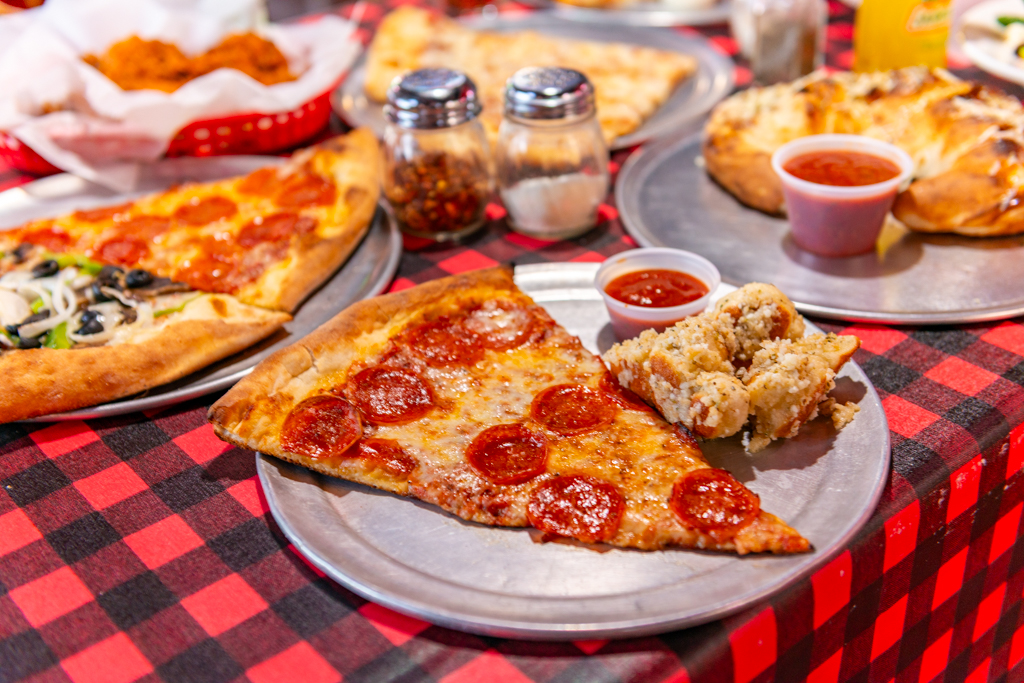
A neighborhood does not adopt a place because the sign is attractive or the menu is long. It does so slowly, almost by instinct. People return after Little League games. Teenagers split a pie after school. A couple orders the same Friday night dinner for ten years and never needs to say their address twice. At some point, the restaurant stops being just a business and becomes part of the local rhythm.
A good pizza restaurant is especially suited to that role. Pizza has range. It can be a quick lunch, a family dinner, a post-game reward, a first date that does not feel too serious, or the easiest answer when eight people need to agree on one meal. It is shareable, familiar, and forgiving of almost any occasion. That gives a pizza restaurant an unusual kind of access to everyday life.
Still, not every pizzeria becomes a local anchor. Some stay transactional. They fill orders, keep the ovens hot, and never quite matter beyond convenience. The difference usually comes down to something less obvious than sauce recipes and topping combinations. The places that become the heart of the neighborhood do many small things right, over and over, until trust builds. The food matters, certainly. So do the room, the staff, the prices, the timing, the owners’ choices, and the way the business behaves when things go wrong.
It starts with food people want on an ordinary Tuesday
A neighborhood restaurant does not live on special occasions alone. It survives on repeat business, which means the pizza has to satisfy people on the days when nobody is trying to be impressed. That is a different standard from destination dining. The pie does not need novelty for its own sake. It needs balance, consistency, and enough character that people can describe it in a sentence.
In practical terms, that often means a dough recipe that behaves predictably across humid afternoons and cold winter mornings, a sauce with clear flavor but not so much sugar or acid that it tires the palate, and cheese applied with restraint. Many operators learn this the hard way. A pizza that wins applause on opening night can feel heavy by week three if every bite is fighting for attention. Neighborhood favorites tend to have proportion on their side. The crust supports without dominating. The toppings make sense together. A plain slice still tastes complete.
Consistency is where many promising places stumble. It is one thing to produce a beautiful pie when the owner is stretching dough at 4 p.m. It is another to send out fifty solid orders between 6 and 7:30 while the phone rings, online tickets print, and a delivery driver is waiting at the counter. Neighbors notice patterns quickly. If the pizza restaurant is excellent one night, careless the next, and late the night after that, enthusiasm fades. Reliability is not glamorous, but it is what builds habit.
The restaurants that become neighborhood fixtures also understand local appetite. In one area, a crisp, foldable slice may be the benchmark. In another, people expect a thicker crust with enough structure for generous toppings. Some communities want large specialty pies for group dinners. Others order personal pizzas, salads, and pasta for mixed households. A smart operator pays attention to what residents actually buy, not what food media says they should want.
Hospitality shows up in memory, not slogans
Most people can tell within thirty seconds whether a place is genuinely welcoming. The host makes eye contact. The cashier remembers a name. A server knows which booth works best for the family with two young kids and a stroller. None of this requires theatrical friendliness. In fact, the most effective hospitality is usually matter-of-fact. It feels steady, not performed.
That matters because neighborhood loyalty is emotional before it is rational. Customers do not only remember the crispness of the crust. They remember being taken care of when a storm knocked out the power at home and the restaurant stayed open. They remember that the staff made room for twelve people after a school concert ran late. They remember that when a child dropped a slice on the floor, someone quietly brought another one without charging for it.
Small gestures gain force through repetition. A pizza restaurant that knows its regulars without making newcomers feel invisible has found a difficult balance. Familiarity can turn cliquish if the room feels like a private club. The best neighborhood spots avoid that trap. They treat regulars warmly, but they also make first-timers feel as though they could become regulars.
This is one reason owner presence still matters. Even in an era of online ordering and third-party delivery, customers notice when someone with authority is physically in the room, paying attention to details. Owners who greet tables, check the dining room, taste the sauce, and jump onto the line during a rush send a quiet message that standards are being guarded. That does not mean owners must become mascots. It means the business feels inhabited.
The room has to invite a cross-section of the community
People often underestimate how much design affects whether a restaurant becomes woven into neighborhood life. Not upscale design, necessarily, but functional design. Is the dining room loud in a way that energizes, or loud in a way that drives out older guests? Are the tables flexible enough for both couples and youth teams? Is there a counter where solo customers can eat comfortably? Can parents manage a stroller without feeling like they are blocking traffic?
The heart of the neighborhood is rarely a place built for one narrow audience. It has to handle many kinds of use in the same week. Tuesday might bring retirees at lunch and freelancers with laptops in the late afternoon. Friday means families by six, high school students by eight, and delivery orders stacked to the ceiling by nine. Sunday after church is a different crowd than Wednesday after soccer practice. A pizza restaurant that serves all of them well becomes more than a meal stop. It becomes shared ground.
Even the visual cues matter. Some of the most beloved pizzerias are not polished in the modern branding sense. Their booths may be worn smooth, the menu boards slightly dated, the photos on the wall a little crooked. If the place is clean and cared for, those imperfections can work in its favor. They signal continuity. People like restaurants that look lived in, especially if the neighborhood itself values stability over reinvention.
There is, however, a trade-off. Nostalgia cannot excuse neglect. Sticky tables, bad lighting, broken restroom fixtures, and tired HVAC will eventually drive people away, no matter how strong the memories are. The best operators know how to preserve character while investing in upkeep. That balance is harder than a full remodel because it demands restraint. You have to improve the place without sanding off the personality people came to love.
Price tells people whether they belong
A pizza restaurant can lose its neighborhood standing if residents start feeling priced out of their own local spot. People are willing to pay for quality, and ingredient costs have risen sharply in recent years, but there is a threshold beyond which a pizzeria stops functioning as an everyday option. Once that happens, visits become occasional, then sentimental, then rare.
This does not mean the cheapest place wins. In my experience, customers accept fair pricing when they can see where the value lives. A large pie that feeds four people comfortably has obvious utility. A lunch slice and drink combo undercuts the cost of many fast-casual meals. Family bundles simplify ordering and help parents keep dinner within budget. Portions, clarity, and honesty matter as much as sticker price.
The strongest neighborhood pizza restaurant usually has a menu architecture that welcomes different spending levels. Someone can come in for one slice and feel just as valid as the family ordering appetizers, salads, two pizzas, and dessert. This is more important than many owners realize. People do not want to feel that the restaurant only loves them when the ticket is high.
There is also a psychological element to pricing. If every menu item feels engineered for upselling, trust erodes. Customers can sense when a place is trying too hard to raise the average check. By contrast, when specials feel useful, substitutions are handled reasonably, and the bill lands where people expected, confidence grows. In a neighborhood setting, that confidence often turns into frequency.
The staff becomes part of local life
Restaurants that anchor communities usually have recognizable faces. The server who has worked there for eight years. The cashier who remembers three generations of one family. The cook visible from the open kitchen, sliding pies into the oven with practiced economy. Familiar staff create continuity, and continuity is one of the most underrated ingredients in hospitality.
High turnover changes the feeling of a place. It can make service uneven and the atmosphere less grounded. Customers notice when nobody knows the menu deeply, when systems are being relearned in real time, or when the room feels staffed by strangers. Retention does not happen by accident. Operators who keep good people tend to offer predictable schedules, respectful management, decent training, and at least some path to greater responsibility.
That internal culture reaches the dining room. A tense restaurant often shows its stress publicly. Guests hear sharp exchanges, see panicked movement, and absorb the sense that everyone is one ticket away from conflict. A calm restaurant, even when busy, feels coordinated. Orders still take time during a rush, but customers can tell the team knows how to work together.
There is a practical side to this too. Long-term staff often serve as informal historians of the neighborhood. They know which school just made the playoffs, which block party is happening this weekend, which church group needs twelve pies every first Sunday, and which customer lost his job and may quietly appreciate an extra garlic knot in the bag. Businesses cannot manufacture that kind of embedded knowledge through branding campaigns.
A pizza restaurant proves itself when the town needs it
You learn what a restaurant means to its neighborhood during disruptions. Snowstorms, local fundraisers, power outages, funerals, championship games, school events, road closures, community celebrations, and hard weeks all reveal the difference between a place that simply operates nearby and one that belongs.
Many neighborhood pizzerias build deep loyalty through acts that never make press releases. They donate trays to a teacher appreciation lunch. They feed volunteers during a cleanup. They stay open a little late after a community event runs behind schedule. They help sponsor jerseys for a youth team, not because it produces measurable return on investment, but because the owner’s kid once played on that field too.
There is a smart business case for this, but the motive matters. People can tell when support is sincere and when it is purely promotional. A banner with the restaurant’s logo at a charity event is not the point. The point is whether the restaurant shows up repeatedly enough that its presence feels normal.
The response to mistakes matters just as much. Orders will be wrong sometimes. Deliveries will be late. Dough will run low on a night no one predicted. Equipment will fail. What customers remember is the recovery. A neighborhood place earns grace when it apologizes plainly, fixes the problem quickly, and does not make the customer fight for fairness. Communities are often remarkably forgiving of honest errors. They are much less forgiving of indifference.
The menu can evolve, but the identity cannot drift
Every restaurant faces pressure to change. Tastes shift. Ingredient costs rise. Dietary requests become more varied. Competition multiplies. It is wise for a pizza restaurant to adapt, but adaptation has limits. Neighborhood regulars usually want thoughtful refinement, not reinvention.
A pizzeria may add a gluten-conscious crust option, improve its salads, develop a stronger takeout system, or bring in a seasonal specialty that reflects local produce. Those are healthy adjustments. They help the restaurant stay relevant without confusing its core audience. Problems begin when the menu starts chasing trends so aggressively that the place forgets what made it dependable.
I have seen restaurants dilute their identity by trying to become all things at once: sports bar, craft cocktail lounge, artisan bakery, brunch spot, and upscale dinner https://landenatbi532.almoheet-travel.com/how-a-pizza-restaurant-turns-meals-into-shared-experiences-1 destination, all while still claiming to be the local pizza restaurant. Very few concepts can carry that much weight. Most end up serving several audiences poorly instead of one community well.
Customers are not resistant to change by default. They are resistant to losing what they love. If the dough changes, they want to know why. If a beloved special disappears, they want to feel that the decision was necessary, not casual. The strongest operators communicate through the experience itself. The food is better, the service still feels familiar, and the regulars can see that the restaurant is growing responsibly rather than drifting.
Convenience matters more than romantic narratives admit
It is pleasant to imagine that community loyalty is built purely on warmth and tradition. In reality, logistics count. A pizza restaurant becomes central to neighborhood life partly because it fits people’s schedules. The phone is answered. Online ordering works. Pickup is efficient. Delivery zones make sense. Parking is manageable, or the walk is easy enough that it does not matter.
Families making dinner decisions at 5:45 are not conducting philosophical debates about authenticity. They are asking practical questions. How long will this take? Will the kids eat it? Can we afford it tonight? Will the order be right? If the answer to those questions is consistently yes, the restaurant earns a durable place in the weekly routine.
This is one reason many deeply loved pizzerias invested early in operational basics rather than cosmetic flash. Clear menu design, sensible packaging, a separate station for pickups, and realistic delivery estimates are not glamorous improvements, but they reduce friction. Less friction means more repeat business.
There is a caution here too. Convenience should support the experience, not flatten it. Third-party delivery platforms brought reach, but they also introduced mistakes, thinner margins, and weaker direct relationships with customers. Some pizza restaurants have managed this well by using those platforms selectively while preserving strong in-house ordering channels. Others have let the guest relationship drift through an app, which can slowly erode the personal texture that made the place local in the first place.
The strongest places reflect the neighborhood without pandering to it
A neighborhood pizza restaurant should feel like it belongs where it is. That does not mean it must mimic every passing preference. It means the place understands the local culture deeply enough to respond with judgment.
In a working-class area, that might mean portions that respect tight budgets and hours that accommodate shift workers. In a district with many young families, it may mean fast service, high chairs, and a menu that balances child-friendly staples with food adults actually want to eat. Near a college, late-night reliability and durable slice quality can matter more than a polished dining room. In a dense urban neighborhood, takeaway speed may be the defining advantage. In a small town, the restaurant may function almost like a public square.
The subtlety lies in respecting the neighborhood as it is, not as an owner wishes it were. Restaurants get into trouble when they impose an identity that feels imported, especially if it comes with prices, attitudes, or design choices that signal exclusion. Communities are usually open to ambition. They are less open to condescension.
At the same time, local relevance does not require lowering standards. Some of the most beloved pizzerias raised expectations in their neighborhoods precisely because they took quality seriously. They sourced better flour, improved fermentation, trained staff more rigorously, or tightened sanitation and service systems. Residents welcomed those improvements because they were offered in a spirit of service, not superiority.
Why these places endure
The neighborhood heart is not always the fanciest place, the most reviewed place, or even the place that makes the best single pizza in a fifty-mile radius. It is the place that people can rely on, identify with, and fold into their lives without effort. That kind of loyalty is earned through hundreds of ordinary interactions.
A pizza restaurant reaches that status when it serves food that holds up on the tenth visit, not just the first. When it remembers people. When its prices allow regular use. When the room welcomes different ages and incomes. When the staff stays long enough to become familiar. When the business shows up for the community in practical ways. When convenience supports the relationship rather than replacing it. When the place evolves carefully and keeps its center.
At their best, neighborhood pizzerias do something many businesses claim but few accomplish. They give people a dependable shared place. Not a staged experience, not a concept optimized for photographs, but a real room with warm ovens, recognizable voices, and food that fits into the texture of daily life. That is why a great pizza restaurant can outlast trends, weather hard years, and remain full of stories long after flashier spots have come and gone.
Once a restaurant reaches that level, people do not talk about it only in terms of slices or crust. They talk about where they sat after a graduation, who worked the counter when they were kids, what they ordered after a rough week, and how the place still smells the same when they come back to visit. At that point, the restaurant is no longer just serving the neighborhood. It is helping define it.
RUFFRANO'S HELL'S KITCHEN PIZZA Security
385 Main St, Colorado Springs, CO 80911
(719) 390-4355
FAQ About pizza restaurant
Is there a Hell's Kitchen pizza restaurant in Security-Widefield?
Yes. Ruffrano's Hell's Kitchen Pizza has a Security-Widefield location at 385 Main St.
Where can I find pizza delivery in Security-Widefield?
Ruffrano's Security location offers online ordering. Enter your address at checkout to check delivery availability and fees.
Where can I find gluten-free pizza in Security-Widefield?
Ruffrano's menu lists a 12-inch gluten-free option. Call the Security location to confirm availability and ask about shared equipment if cross-contact is a concern.